How I Make Aloe Vera Oil for Stronger Hair
If you’re looking for a natural way to boost hair growth, strengthen strands, and reduce hair fall without expensive products, aloe vera oil could be…

I make this in small batches because it doesn’t keep long, and a big jar just sits there going faintly rancid at the back of a cabinet. Aloe vera oil isn’t going to regrow hair that isn’t growing — nothing rubbed into a scalp does that — but a clean, well-moisturized scalp is a real foundation for healthier-looking hair, and this is a cheap, low-effort way to work toward that.
Jump to section
Why aloe helps at all
Aloe vera contains vitamins A, C, E, and B-complex, which support the scalp, plus enzymes with mild anti-inflammatory properties that can calm irritation and dandruff. It also holds onto moisture well, which is most of what conditions hair and helps it look smoother over time. None of that is dramatic on its own; used consistently, it adds up to a cleaner, better-hydrated scalp.
What you’ll need
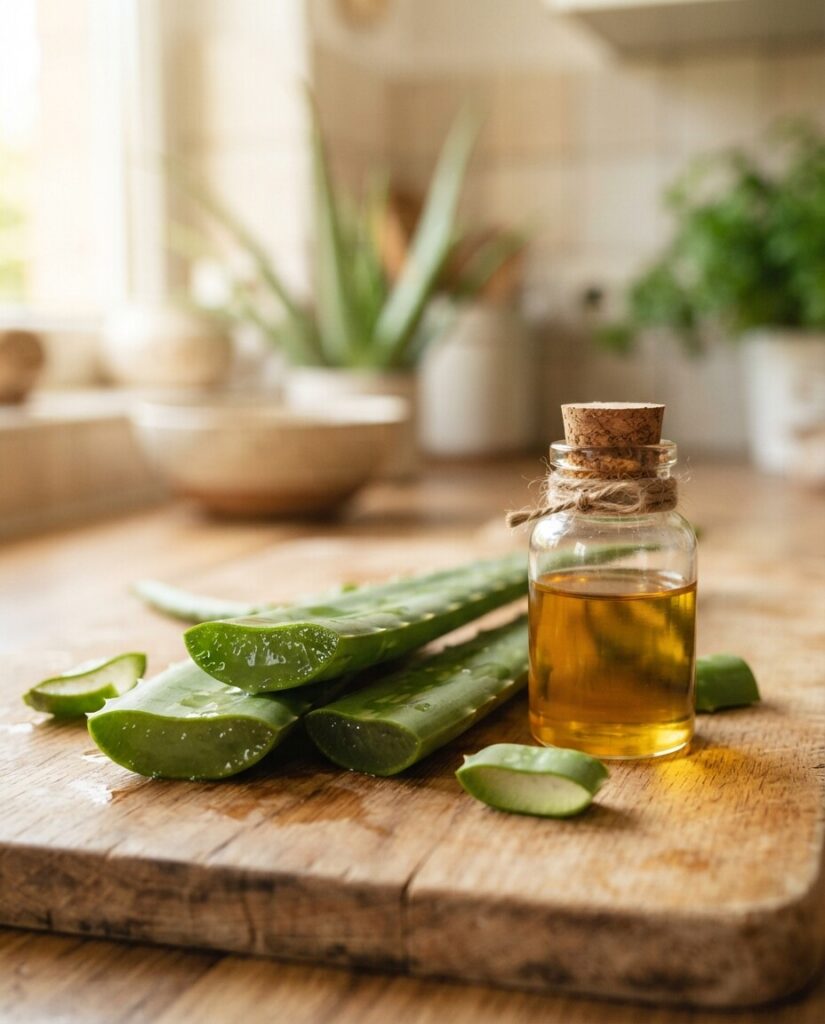
- 1 large fresh aloe vera leaf (or 2–3 tablespoons of pure aloe gel)
- 1 cup carrier oil, such as extra-virgin olive oil, coconut oil, or jojoba oil
- Optional: 5–10 drops of rosemary essential oil, for extra scalp stimulation
How I make it
- Clean the aloe leaf and trim away the sharp edges.
- Open it and scoop out the clear gel, then chop it into small pieces.
- Warm the carrier oil in a small saucepan over low heat.
- Add the aloe gel and stir gently for 10–15 minutes, until it turns lightly colored and fragrant.
- Take it off the heat, let it cool, then strain through a fine cloth into a clean glass bottle.
- Store somewhere cool and dark. It keeps for up to three months.
How to use it
- Start with clean, dry or slightly damp hair.
- Massage a few drops into your scalp for 3–5 minutes. This is the part that matters most, since it moves blood through the scalp and helps the oil sink in.
- Work the rest through the length of your hair to moisturize the ends.
- Cover with a shower cap or warm towel and leave it for at least 30 minutes. Overnight goes deeper.
- Wash out with your regular shampoo.
- Two or three times a week is plenty.
Mistakes that quietly ruin a batch
I learned the hard way that the most common mistake is not warming the mixture long enough — if the aloe’s natural water content doesn’t cook off, that leftover moisture is exactly what mold needs later in the bottle. Keep it at a gentle simmer, not a boil, for the full 10 to 15 minutes. Skipping the strain step is another one; small aloe fibers left in the oil end up in your hair and are annoying to work out, as I found out the first time I got impatient. And storing the bottle somewhere sunny, like a windowsill, breaks the oil down faster than the label suggests; a cupboard or drawer keeps it going the full three months instead of one. Using a leaf that’s already gone soft or reddish is worth avoiding too — that’s a sign it’s past its best and the gel inside won’t be as clean.
How to tell it’s gone bad
A clean batch smells faintly grassy and herbal, close to the carrier oil you started with. If it turns sour, musty, or noticeably cloudy, or you see any specks floating in it, throw it out rather than risk it near broken skin or your scalp. This is a cheap ingredient to remake; it’s not worth stretching a questionable batch another week. Labeling the bottle with the date you made it is a small habit that saves the guesswork three months from now, when you’re trying to remember if it’s still good.
Setting expectations
This is a maintenance habit, not a fast fix. Hair that’s thinning for reasons like genetics, hormones, stress, or a nutrient deficiency needs more than a scalp oil, and if you’re seeing noticeably more shedding than usual, it’s worth a conversation with a doctor rather than relying on home remedies alone. Aloe oil’s honest job is keeping the scalp comfortable and hydrated, which is a real, useful thing on its own, just not a cure for anything.
What actually moves the needle
Consistency matters more than the oil itself; any difference usually shows up somewhere in the four-to-eight-week range, not after one use. Staying hydrated and eating enough protein helps from the inside. And patch-test the mixture on a small area of skin before you put it anywhere near your scalp — aloe is gentle for most people, but not everyone.
Wellness note: This article is for general information only and is not medical advice or a substitute for professional diagnosis or treatment. Natural ingredients can cause irritation, allergic reactions, or interact with medications. Patch-test anything applied to skin, and consult a qualified healthcare professional before trying a remedy — especially if you are pregnant, take medication, or have a health condition. Seek prompt medical care for severe, worsening, or persistent symptoms.