Castor Oil Packs: What They Actually Do
An honest guide to castor oil packs as a warm topical comfort ritual: what the evidence really supports, what it does not, and who should be cautious.

A quick note: this is a traditional home remedy shared for general interest — not medical advice. See our medical disclaimer, and please see a doctor for severe, worsening, or persistent symptoms.
Jump to section
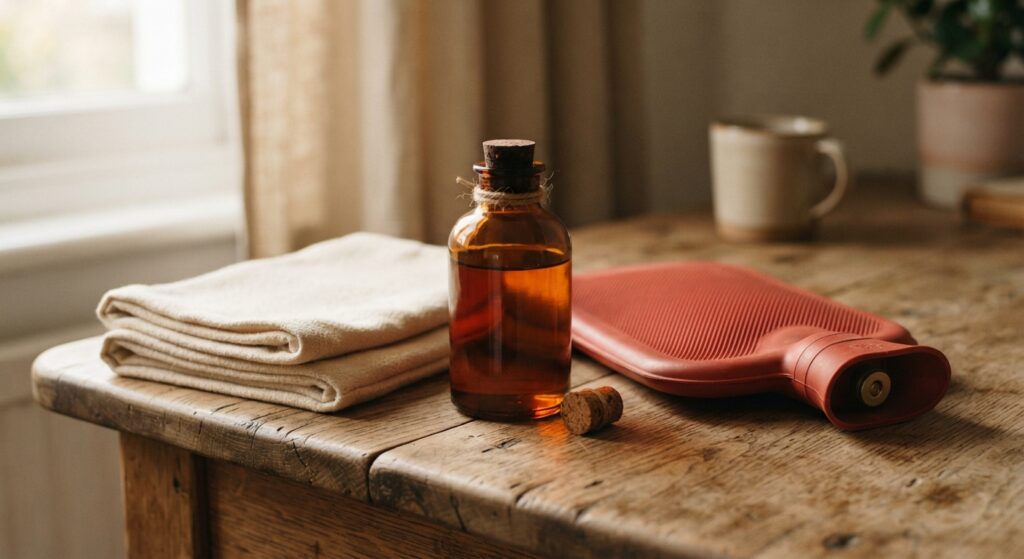
I keep a bottle of castor oil under the sink for exactly one reason: on a night when my stomach feels tight and cranky, warming some up and lying still with it on my belly for an hour genuinely helps me settle down. That’s the whole trick, honestly. Herbalists have been doing this for close to a century: a cloth soaked in castor oil, laid over the abdomen, covered to protect the sheets, warmed with a hot water bottle while you rest. People reach for it during sluggish digestion, bloating, period cramps. It’s a comfort ritual, not a treatment for an organ, and that distinction matters more than the ritual itself.
What’s actually in the oil
Castor oil is a thick vegetable oil pressed from the castor bean. Its main component, ricinoleic acid, has shown some anti-inflammatory activity in lab studies. Warmed and applied to skin, it soothes and sinks into the surface layers, much the same relief you’d get from a heating pad, plus a moisturizing layer of oil on top. That’s the honest core of what a pack offers.
Where the claims run ahead of the evidence
You’ll find bold claims online that castor oil packs cleanse the liver, drain the lymphatic system, flush the body. The human evidence for any of that is thin, and I’d rather set it aside than repeat it. A pack sits on the outside of your body. It doesn’t treat, cleanse, or drain an internal organ from out there.
What people reliably report is comfort: warmth on the belly easing cramping and tension, and the ritual of lying still for an hour being relaxing in its own right. A handful of small, older studies have poked at other effects, but nothing strong enough to promise you anything. Treat the pack as what it plainly is, a pleasant source of localized warmth and a good excuse to rest.
One firm line: castor oil is a strong stimulant laxative when swallowed. Don’t drink it as a casual home laxative without medical guidance, and don’t confuse this pack with that. A castor oil pack is strictly external, nothing about resting oil on your skin is meant to move your bowels.
How I use one
- Soak a folded piece of undyed flannel in cold-pressed castor oil until it’s saturated but not dripping.
- Lay it over your abdomen, then cover it with a cloth or plastic sheet to keep the oil off your clothes and bedding.
- Rest a warm, not hot, water bottle or heating pad on top, and lie down for forty-five minutes to an hour.
- Patch-test first; some skin doesn’t love castor oil. Wash the area afterward, and use old cloths, because the oil stains fabric permanently.
The step most people skip is the one that matters most: actually resting. Half the benefit is just an hour of stillness and warmth.
Safety and when to see a doctor
Skip castor oil packs during pregnancy unless your own clinician has specifically approved them, castor oil is linked to stimulating the uterus. Don’t use them over broken, irritated, or infected skin, and stop if a rash shows up. And a pack is never a substitute for a diagnosis. Ongoing abdominal pain, changes in bowel habits, unexplained weight loss, fever, or anything severe or worsening needs a proper medical look. Warmth can soothe discomfort. It can’t tell you what’s causing it.
A castor oil pack won’t cleanse an organ or replace medical care. What it will do is give you a low-risk, genuinely pleasant hour of warmth, and honestly, that’s worth something.
This article is for general educational purposes only and is not medical advice. Traditional remedies are not a substitute for professional care. If your symptoms are severe, persistent, or getting worse, please consult a qualified healthcare provider.
Health disclaimer: This article describes a traditional folk remedy for general information only. It is not medical advice and is not a substitute for professional diagnosis or treatment. Some remedies can cause irritation, allergic reactions, or interact with medications. Consult a qualified healthcare professional before trying any remedy, patch-test anything applied to skin, and seek prompt medical care for severe, worsening, or persistent symptoms. See our full Medical Disclaimer.