How to Stock a Practical Pantry
The short list of pantry staples, and the roles they play, that let you cook a real meal on a busy night without a special trip to the store.

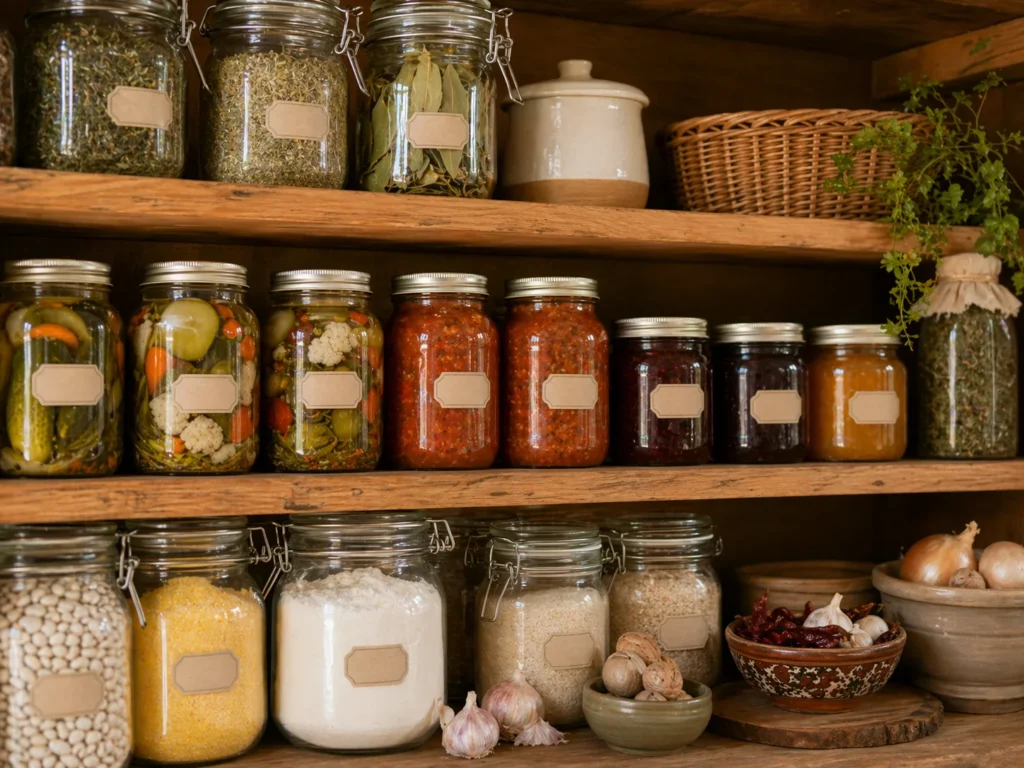
A useful pantry isn’t a wall of jars you never open. It’s a compact, dependable set of ingredients that add up to a real dinner on the nights you have no plan and no energy. Stocked well, it turns “there’s nothing to eat” into a plate of food in about twenty minutes, with no special trip to the store. Here’s how to build one that earns its shelf space.
Think in roles, not shopping lists
The trick to a pantry that actually cooks is to stop thinking in individual products and start thinking in jobs. Almost every satisfying meal is built from four roles:
- Substance — the filling base: pasta, rice, potatoes, bread, noodles.
- Protein — the staying power: tinned beans, lentils, tinned fish, eggs.
- Flavor — the character: aromatics, spices, condiments.
- Acid and fat — the finish that ties it together: vinegar, lemon, good oil.
Keep at least one dependable option in each role and you can improvise dinner almost indefinitely. Run out of a whole role and even a full cupboard starts to feel empty.
The substance: your carbohydrate base
These are the cheapest, longest-lasting, most forgiving things you’ll own. Stock two or three you genuinely like to eat:
- Dried pasta — keeps 1 to 2 years, cooks in ten minutes, and pairs with almost anything.
- Rice — white rice keeps for years; brown rice lasts only about six months, because the oils in the bran eventually turn.
- Potatoes and onions — not shelf-stable forever, but good for weeks in a cool, dark, airy spot (stored apart, not touching).
- Couscous or dried noodles — for nights you want something different, fast.
Protein that keeps
This is the part people skimp on, and it’s the difference between a snack and a meal. None of it needs the fridge until it’s opened:
- Tinned beans — chickpeas, cannellini, black beans. Rinse and they’re ready in seconds.
- Dried lentils — red lentils collapse into a soup in about 20 minutes with no soaking; green and brown hold their shape for salads and stews.
- Tinned fish — tuna, sardines, mackerel. Cheap protein that arrives with its own flavor.
- Eggs — technically fridge dwellers, but the most flexible “pantry” protein there is.
Flavor is the multiplier
A bag of pasta is potential; a jar of mustard is a plan. The ingredients in this group cost little, last a long time, and do more for a plain meal than another sack of staples ever could.
Aromatics and pantry tins
- Onions and garlic — the foundation of most savory cooking.
- Tinned tomatoes — the single most useful can you can own; a sauce, a braise, or a soup all start here.
- Tomato paste and stock cubes or paste — concentrated, backbone flavor in a spoonful.
The seasoning shelf
- Good salt — the one thing that improves nearly everything.
- A small spice set — black pepper, cumin, smoked paprika, chili flakes, and a dried herb like oregano cover a lot of ground.
- Condiments with punch — mustard, soy sauce, and a hot sauce you actually like.
- Something acidic — vinegar and a lemon. A splash of either wakes up a dish that tastes flat.
Real combinations, not just a list
A pantry proves itself in what it makes. Here are honest, roughly twenty-minute meals from the shelves above, no fresh shopping required:
- Pasta with garlic, oil, and chili — pantry pasta at its purest; add a tin of tuna and a squeeze of lemon to turn it into dinner.
- Chickpeas with tinned tomatoes, onion, and cumin — simmer 15 minutes and spoon it over rice.
- Red lentil soup — lentils, an onion, a stock cube, and cumin or curry powder; blended smooth or left rustic.
- Rice and black beans — beans warmed with smoked paprika and garlic, finished with a hit of vinegar.
- Tomato and white bean stew on toast — cannellini, tinned tomatoes, garlic, oregano, and olive oil.
Notice the pattern: a substance, a protein, tinned tomatoes or aromatics for flavor, and acid or oil to finish. Once you see it, you’ll build your own without a recipe in front of you.
Buy, store, and rotate without waste
A practical pantry is one you cook through, not one that quietly expires. A few habits keep it honest:
- Restock as you go, not in one giant haul. When you open the last tin of tomatoes, that’s your signal to buy more — not a monthly panic-shop that leaves you with duplicates.
- Put older stock in front. First in, first out, so nothing gets buried and forgotten at the back.
- Keep it cool, dark, and dry. Heat and light are what age dried goods and turn oils rancid, so a cupboard away from the stove beats a shelf right above it.
- Know the rough shelf lives. Tinned goods generally hold 1 to 3 years, dried pasta 1 to 2, ground spices fade after about a year (whole spices last longer), and oils are best within 18 to 24 months.
If you’re regularly tossing things out unopened, that’s the pantry telling you it’s bigger than your cooking. Scale it back to the set you truly rotate through in a month or two.
Frequently asked questions
What should I buy first for a bare pantry?
Tinned tomatoes, dried pasta or rice, an onion, garlic, salt, and olive oil. Between them you’re never more than twenty minutes from a real meal, and everything else builds outward from that core.
How much pantry stock is too much?
If things expire before you reach them, you’re storing more than you cook. Aim for a supply you’ll rotate through in a month or two, and let the empty spaces — not a calendar — tell you when to restock.
How do I store dried goods so they last?
Cool, dark, dry, and airtight. Move opened pasta, rice, and flour into sealed containers to keep out moisture and pantry moths, and keep everything away from the heat of the stove or a sunny window.
The information on Kepoli is provided for general informational purposes only and is not professional medical, health, nutritional, or safety advice. Always use your own judgment and consult a qualified professional before acting on it.