Why Tomatoes Split: The Hidden Truth Behind Cracked Tomatoes and How to Prevent It
If you’ve ever ventured into growing your own tomatoes, you’ve probably encountered the frustrating sight of cracked, split, or burst fruit just as it…

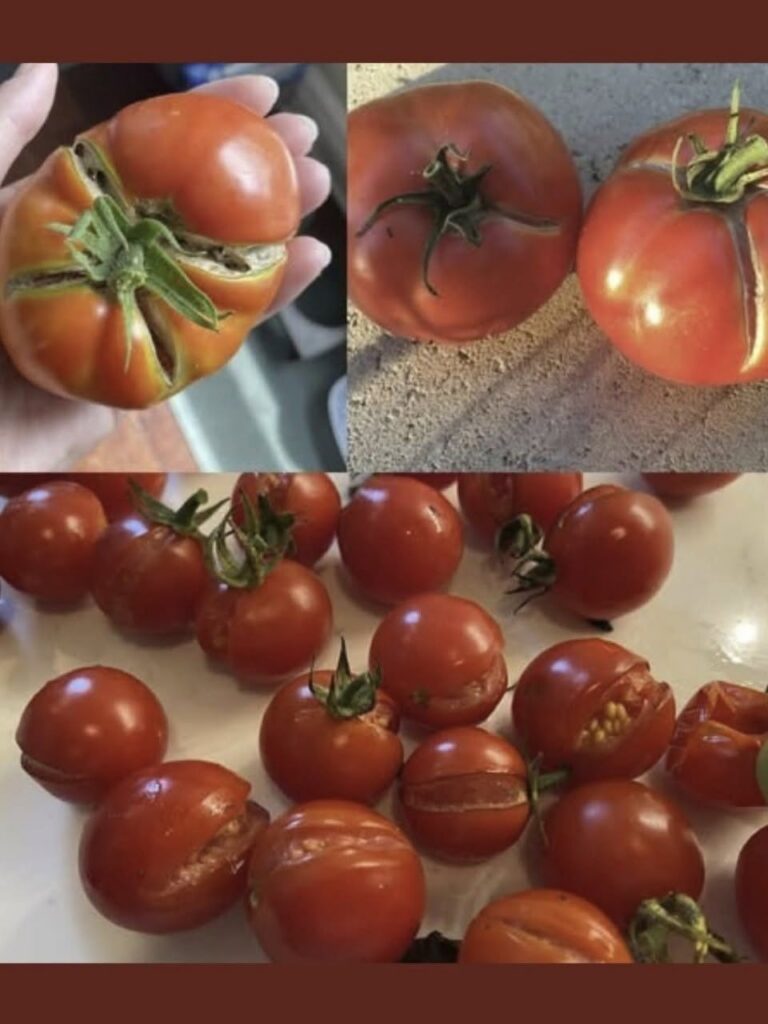
If you’ve ever ventured into growing your own tomatoes, you’ve probably encountered the frustrating sight of cracked, split, or burst fruit just as it was reaching peak ripeness. Whether they’re cherry tomatoes or hefty beefsteaks, this issue can strike unexpectedly and leave you wondering what went wrong.
Let’s explore why tomatoes split, what it means for your plants, and most importantly — how to stop it from happening again.
🌿 The Real Reason Tomatoes Split
Tomatoes split primarily due to rapid changes in water availability, especially after a dry spell followed by heavy rain or aggressive watering.
Here’s how it happens:
During dry periods, tomato plants slow down their growth and water intake.
Suddenly, when there’s a surge of water (rain or irrigation), the plant drinks it up quickly.
This influx causes the inside of the tomato to expand faster than the skin can stretch, resulting in splits or cracks.
It’s similar to overfilling a balloon that’s already at its limit — something’s gotta give.
🌦️ Types of Tomato Splitting
Radial Cracks
Extend from the stem outward like spokes on a wheel.
Caused by a sudden influx of water after a dry spell.
Concentric Cracks
Form rings around the stem end.
Often occur as the fruit ripens and are more common in heirloom varieties.
Both types can affect appearance but don’t necessarily mean the tomato is ruined.
🍅 Are Split Tomatoes Safe to Eat?
Yes — in most cases, split tomatoes are perfectly safe to eat if consumed soon after harvesting. However, cracks make them vulnerable to:
Mold
Insects
Bacterial infections
If a tomato is split but not showing signs of rot or infestation, simply cut away the damaged area and enjoy the rest.
Read More
Consistent Watering
Avoid letting the soil dry out completely. Water deeply and regularly, especially during hot weather.
Use mulch to help retain soil moisture and regulate temperature.
Pick Tomatoes Early
As tomatoes start to blush (turn from green to red), consider harvesting them early.
Allow them to finish ripening indoors, away from unpredictable weather.
Improve Drainage
Make sure your garden bed or container isn’t waterlogged after rain.
Proper drainage keeps water levels balanced around the roots.
Choose Resistant Varieties
Some tomato types are more prone to cracking than others. Look for hybrid or crack-resistant strains if this is a recurring issue.
🌱 Final Thoughts
Tomato splitting is a natural response to stress, not a sign of failure. It’s a common problem that even seasoned gardeners face. The good news? It’s preventable with a little extra care in your watering habits and harvest timing.
So next time you spot a cracked tomato, don’t toss it right away — it’s a reminder from your plant that it’s growing fast and thriving, maybe just a little too enthusiastically. 🌞🍅
Happy gardening — and may your harvests be split-free and sweet!
You May Also Like
 My mother-in-law buys these tablets even if she doesn’t have a dishwasher: thanks to her trick I also got 1 pack for the whole year
 The Mysterious Kitchen Tool That Left the Internet Guessing: Do You Know What It Is?
 Set it and forget it. They’ll be creamy and fluffy for dinner, and you can top them however you like.
 crusted roast beef steak