Tiny White Worms in Strawberries? Here’s What They Really Are and Whether Your Berries Are Safe to Eat
You’ve probably seen the viral videos: soak strawberries in saltwater, and tiny white “worms” start wriggling out. It’s enough to make anyone spit out…

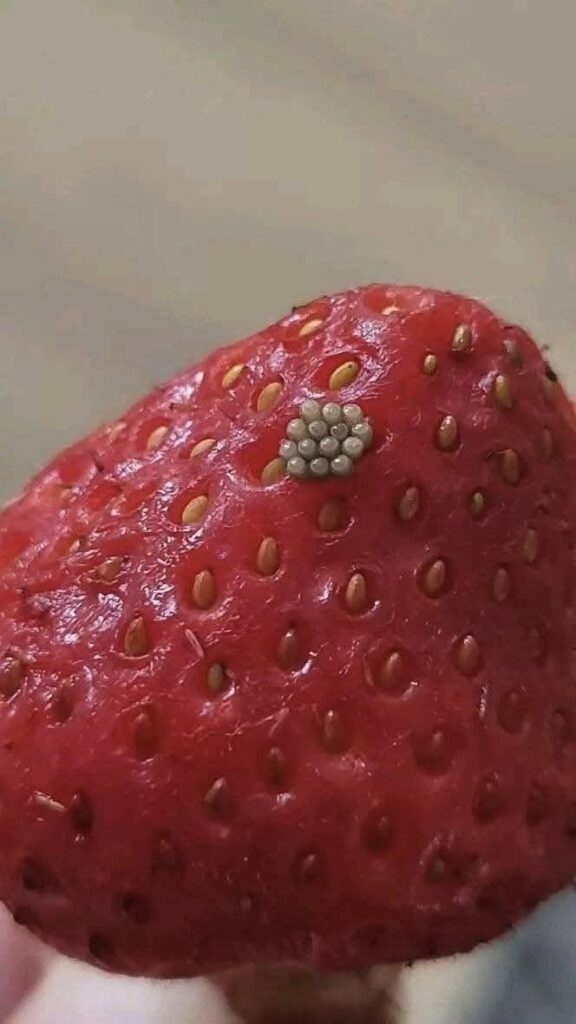
You’ve probably seen the viral videos: soak strawberries in saltwater, and tiny white “worms” start wriggling out. It’s enough to make anyone spit out their smoothie! But before you swear off berries forever, here’s the science-backed truth—plus what to do next.
🐛 What Are Those Tiny White “Worms”?
They’re not worms—they’re spotted wing drosophila larvae (baby fruit flies).
These are small, translucent maggots (2–3 mm long) that feed on soft, ripening fruit.
The adult fly lays eggs just under the skin of strawberries (and raspberries, blueberries, cherries) as they ripen on the plant.
The eggs hatch into larvae that live inside the berry—often undetectable until soaked.
✅ Important: This is a natural agricultural occurrence, not a sign of poor hygiene or “dirty” farming.
🍓 Are They Harmful to Humans?
No.
The larvae are not parasitic—they cannot live or grow inside your body.
If accidentally eaten, they’re digested like any other organic matter—harmless but understandably unpleasant.
The FDA even allows a certain level of insect fragments in produce (called “defect action levels”) because it’s nearly impossible to eliminate them entirely .
📌 Bottom line: Unappetizing? Yes. Dangerous? No.
For Complete Cooking STEPS Please Or Open button (>) and don’t forget to SHARE with your Facebook friends
🔍 How to Check Your Strawberries
SALTWATER SOAK TEST (OPTIONAL BUT EFFECTIVE)
Dissolve 1–2 tablespoons of salt in 4 cups of cold water.
Submerge berries for 10–15 minutes.
Larvae (if present) will crawl out seeking fresh water.
⚠️ Note: This doesn’t mean your berries are “infested”—many batches show zero activity. And soaking isn’t necessary for safety—just peace of mind.
✅ How to Enjoy Strawberries Safely
Rinse thoroughly under cool running water just before eating (removes surface dirt and some larvae).
Hull strawberries (remove the green top)—this often removes egg-laying sites.
Eat soon after buying—larvae develop faster in warm, ripe fruit.
Store in the fridge—slows any potential development.
❌ Don’t use soap, vinegar, or bleach—these can leave residues and aren’t more effective than plain water.
❤️ Final Thought
Finding larvae doesn’t mean your strawberries are “bad”—it means they’re real food, grown in nature.
Even organic farms deal with this—it’s part of growing soft, delicate fruit without heavy pesticides.
So don’t panic. Rinse, hull, and enjoy.
Because the health benefits of strawberries (vitamin C, antioxidants, fiber) far outweigh the rare, harmless surprise.
And if you’re still uneasy?
Bake them into a crisp, blend them into a smoothie, or freeze them for later—heat and blending eliminate any concern.
You May Also Like
 My mother-in-law buys these tablets even if she doesn’t have a dishwasher: thanks to her trick I also got 1 pack for the whole year
 The Mysterious Kitchen Tool That Left the Internet Guessing: Do You Know What It Is?
 Set it and forget it. They’ll be creamy and fluffy for dinner, and you can top them however you like.
 crusted roast beef steak