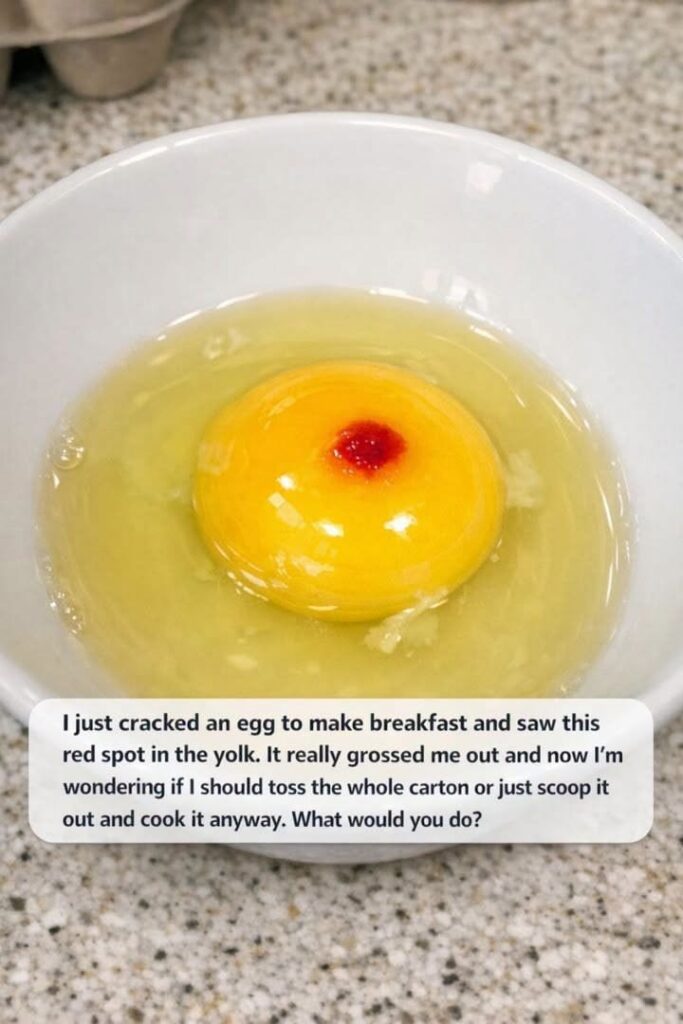
I just cracked an egg to make breakfast and saw this red spot in the yolk. It really grossed me out and now I’m wondering if I should toss the whole
I Cracked an Egg and Found a Red Spot in the Yolk. Should I Throw It Away? Cracking open an egg and finding a red spot in the yolk can be surprising, but…

I Cracked an Egg and Found a Red Spot in the Yolk. Should I Throw It Away?
Cracking open an egg and finding a red spot in the yolk can be surprising, but in most cases, there’s no need to worry.
Here’s what it means—and whether it’s safe to eat.
What Is the Red Spot?
The red spot is usually a blood spot, caused by a tiny blood vessel breaking during the egg’s formation inside the hen.
Less commonly, it may be a meat spot, which is a small piece of tissue from the hen’s reproductive tract. Despite the name, it’s not meat in the way most people think of it.
Both are natural occurrences and are not a sign that the egg was fertilized.
Is It Safe to Eat?
Yes.
According to the U.S. Department of Agriculture (USDA), eggs with blood spots are safe to eat as long as the egg is otherwise fresh and properly cooked.
If the spot bothers you, simply remove it with the tip of a clean knife or spoon before cooking.
Should You Throw Away the Egg?
Usually, no.
A blood spot alone isn’t a reason to discard the egg.
However, you should throw the egg away if you notice any of the following:
A foul or sulfur-like odor
An unusual green, pink, or black discoloration
A cracked shell that appears contaminated
Signs of spoilage, such as mold
If the egg smells normal and looks otherwise fresh, it’s generally safe to use.
Does One Egg Mean the Whole Carton Is Bad?
Does One Egg Mean the Whole Carton Is Bad?
.
Finding a blood spot in one egg doesn’t affect the rest of the carton. Each egg develops individually, so one egg with a blood spot doesn’t indicate a problem with the others.
How Common Are Blood Spots?
Blood spots are uncommon but completely normal. Commercial egg producers use a process called candling, in which eggs are inspected under bright light before packaging. Most eggs with noticeable blood spots are removed during this process, but an occasional one can still reach the grocery store.
Can You Check an Egg Before Cracking It?
You can’t reliably detect a small blood spot from the outside.
If you’re checking for freshness, you can:
Look for cracks in the shell.
Store eggs in the refrigerator at 40°F (4°C) or below.
Use the float test if you’re unsure of an egg’s age (older eggs are more likely to float because their air cell enlarges over time).
Safe Egg-Handling Tips
To reduce the risk of foodborne illness:
Refrigerate eggs promptly.
Wash your hands after handling raw eggs.
Clean surfaces and utensils that come into contact with raw egg.
Cook eggs thoroughly, especially for people at higher risk of foodborne illness.
The Bottom Line
A red spot in an egg yolk is usually just a harmless blood spot caused during the egg’s formation. It doesn’t mean the egg is spoiled or fertilized, and it doesn’t mean you need to throw away the rest of the carton.
If the egg smells fresh and looks normal otherwise, you can simply remove the spot if you prefer and cook the egg as usual. Only discard the eg