Depression-Era Banana Bread from Overripe Bananas
A simple depression era banana bread recipe using overripe bananas, sugar, and pantry staples. Moist, thrifty, and easy with tips for swaps and storage.

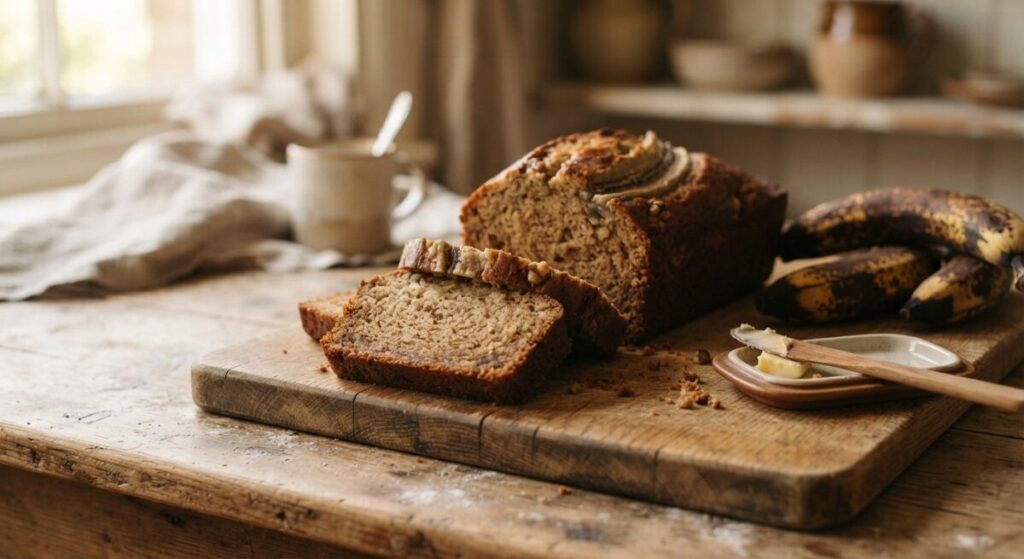
There’s always one banana in the bunch that goes soft and speckled before anyone gets to it — too far gone to eat out of hand, but not actually spoiled. In a household where a nickel’s worth of fruit wasn’t something you let go to waste, that banana didn’t end up in the trash. It got mashed with a fork and folded into a simple batter, and by suppertime the whole kitchen smelled like something worth waiting for.
Banana bread as we know it today largely took shape in the 1930s, and it’s no accident. It arrived at the exact moment home bakers had reliable baking soda and powder in the cupboard and a genuine aversion to wasting food that was still perfectly good to eat, just no longer pretty.
The Story Behind It
Before commercial leaveners were common and affordable, a quick bread like this wasn’t really practical. Once baking soda became a kitchen staple, cooks realized that overripe bananas — soft, deeply sweet, easy to mash — were an ideal base for a loaf that needed very little added sugar and could get by with just one egg and a modest amount of fat. It used up fruit that would otherwise be thrown out, required no yeast or rising time, and turned a few tired ingredients into something that felt like a treat. For families watching every cent, that combination of frugality and genuine deliciousness made it an instant habit, not just a recipe.
Ingredients
- 3 medium very ripe bananas, well spotted or blackened, mashed
- 1/3 cup butter or shortening, melted
- 3/4 cup sugar
- 1 large egg, beaten
- 1 teaspoon vanilla extract, if available
- 1 teaspoon baking soda
- 1/4 teaspoon salt
- 1 1/2 cups all-purpose flour
- 1/2 cup chopped walnuts or pecans (optional)
How to Make It
- Preheat the oven to 350°F. Grease an 8×4 or 9×5 loaf pan.
- In a large bowl, mash the bananas well with a fork until mostly smooth with a few small lumps.
- Stir the melted butter into the mashed banana.
- Mix in the sugar, beaten egg, and vanilla until well combined.
- Sprinkle the baking soda and salt evenly over the mixture and stir in.
- Add the flour and stir just until no dry streaks remain — don’t overmix, or the loaf will turn tough.
- Fold in the nuts, if using.
- Pour the batter into the prepared pan and smooth the top.
- Bake for 55–65 minutes, until a toothpick inserted in the center comes out clean and the top is deep golden brown.
- Cool in the pan for 10 minutes, then turn out onto a rack and cool completely before slicing.
Tips, Swaps & Notes
If you don’t have buttermilk or sour milk on hand for a richer crumb, you don’t need it — this loaf gets its moisture and tang from the bananas themselves, which is part of what made it so practical originally. The riper and more spotted the bananas, the sweeter and more flavorful the bread will be, so don’t be shy about using ones that look almost too far gone. No nuts on hand? A handful of rolled oats or chopped dried fruit works just as well stirred in. The loaf keeps well at room temperature, wrapped tightly, for about three days, and it freezes beautifully whole or sliced — a genuinely useful trick if bananas tend to ripen faster than your household can eat them. A slice toasted with a little butter the next morning may be even better than the day it was baked.
Why It Still Matters
Banana bread has never really gone out of style, and it’s worth remembering why: it turns something about to be wasted into something people actually look forward to. That’s the whole spirit of Depression-era cooking in one humble loaf.
Those spotty bananas were never a problem — they were the whole point.